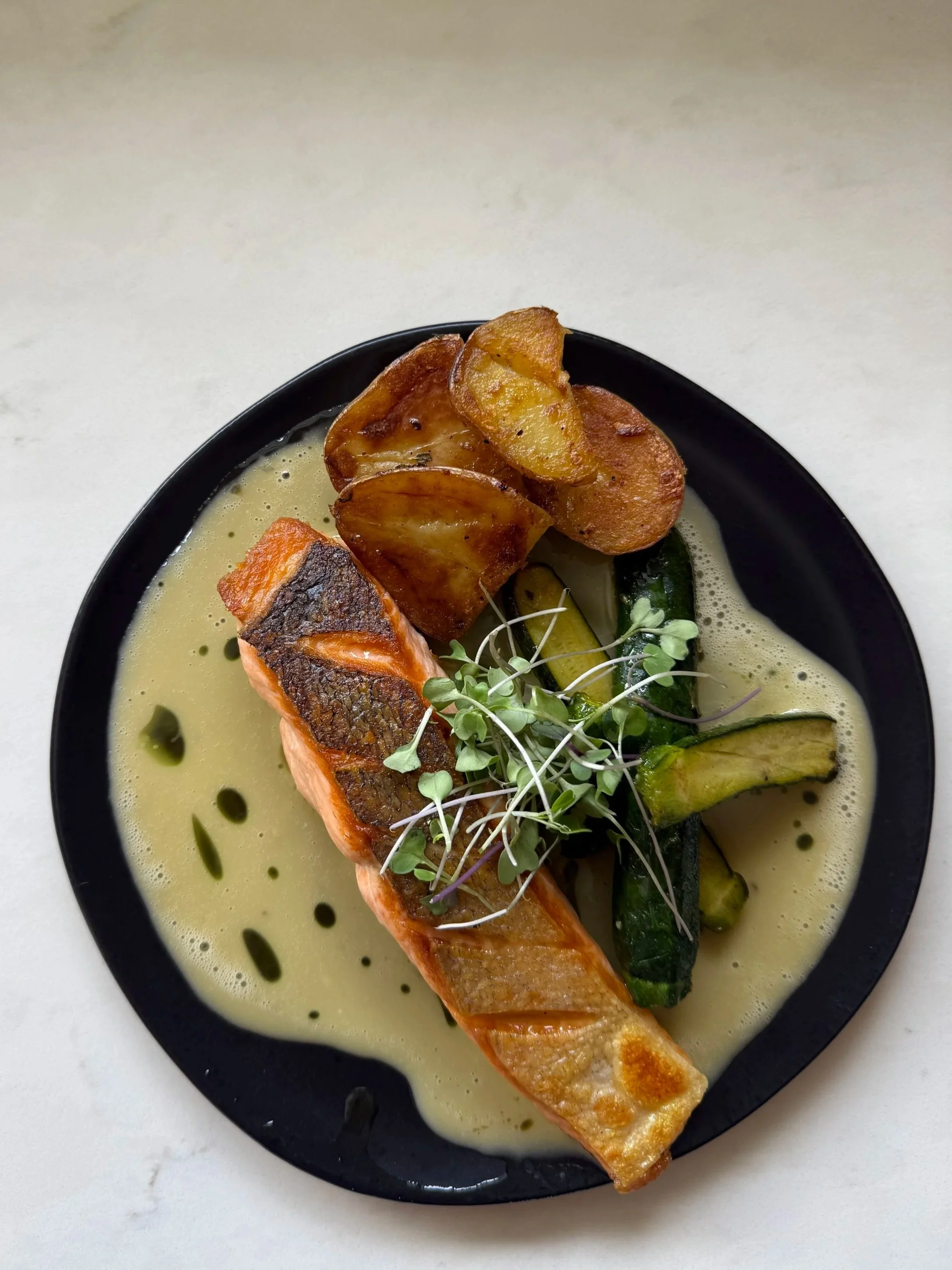
Seared Salmon w/ Lemon Buerre Blanc
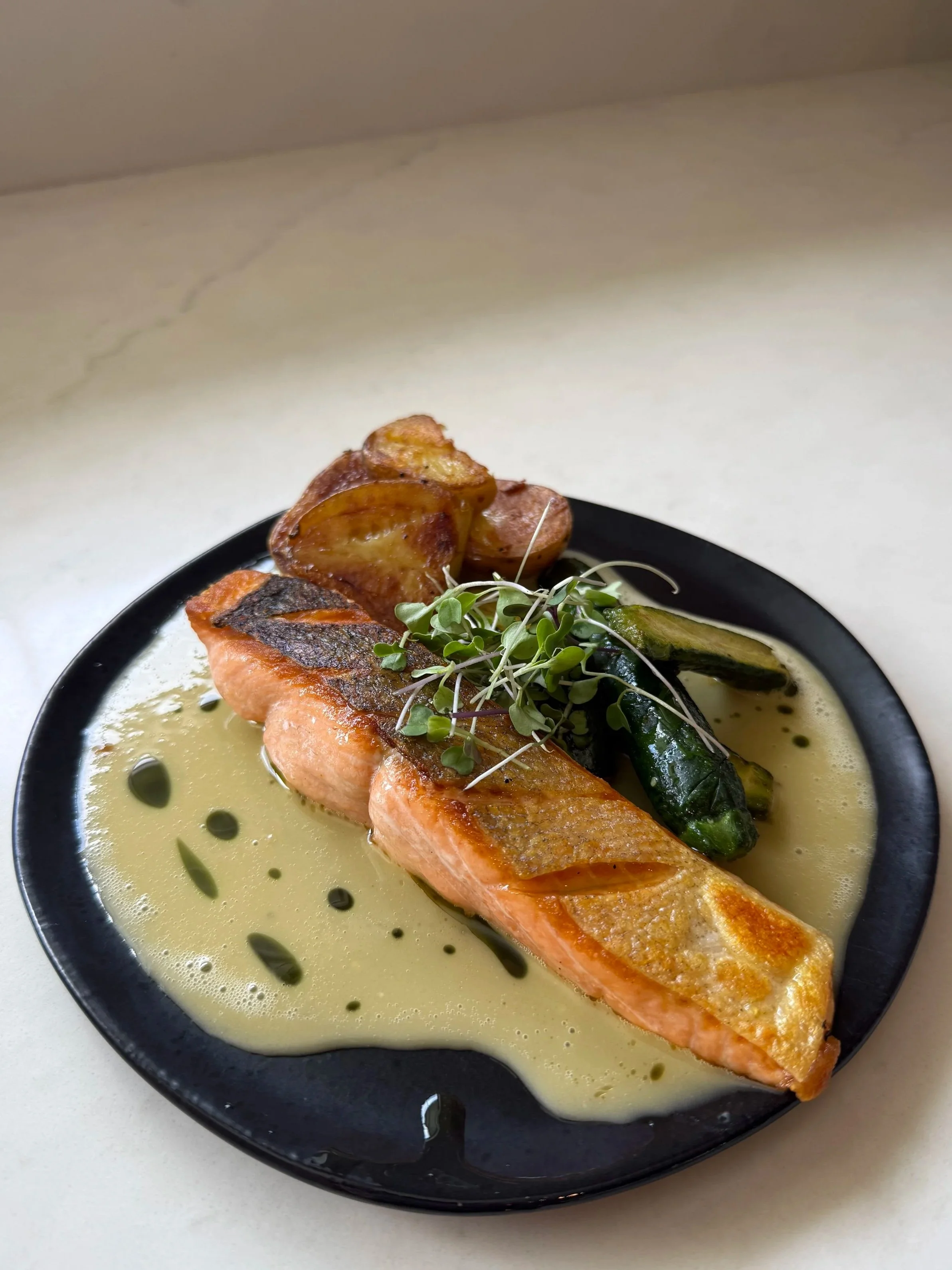
Ohhh, do I love a beurre blanc. It sounds intimidating, but it’s surprisingly easy if you follow the two rules: cold butter and keep the heat low.
At its core, a beurre blanc is just a buttery emulsified sauce made from a reduction of white wine, lemon juice, and shallots. Then you whisk in cold cubes of butter until it transforms into something silky, glossy, and downright luxurious.
It pairs with just about everything. Chicken, scallops, fish, asparagus, artichokes, potatoes... you really can't go wrong. Honestly, you could skip straight to Step 4 and make the beurre blanc for whatever you've got in the fridge. Buuut I am known for making some damn good potatoes so if you're a potato lover, give step 1 a go as well ;)
PREP TIME: 20 minutes
COOK TIME: 40 minutes
TOTAL TIME: 60 minutes
Ingredients (3-4 servings)
For the buerre blanc:
1 tbsp butter
1 shallot, very finely minced (more surface area = better aromatic infusion)
¼ cup dry white wine, like a Sauvignon Blanc
Juice of ½ lemon
½ cup (113g) cold unsalted butter, cubed
Salt, to taste
For the salmon:
3–4 wild king salmon fillets, skin on*
Salt & Pepper
High smoke point neutral oil
*I like to bias cut the fillets (on the diagonal) and give the skin a few shallow scores to prevent the skin from curling
For the potatoes & zucchini
Couple bunches of small summer squash (asparagus is a great alt)
8-10 new potatoes*
Olive oil
2 cloves minced garlic
Garlic powder
White pepper
*New potatoes: young, early-harvest potatoes with thin skins and a naturally creamy, slightly sweet texture that roast beautifully and hold their shape better than mature potatoes. You’ll find them late spring/early summer in Santa Barbara which is… right now.
Finishing:
Flaky sea salt
Basil oil (recipe coming soon)
Microgreens
Step 1: Prep the salmon
Pull the salmon from the fridge to bring to room temp.
Divide into ~6 oz pieces, generously salt, and set aside. I like to score the skin with shallow cuts to relieve tension. This helps the fillet lie flatter in the pan, which leads to more even contact and better crisping. It also gives the fat under the skin an escape path to help it render out.
Step 1: Blanch & roast the potatoes
Preheat the oven to 425 F.
Wash and quarter potatoes. Add a generous amount of salt to a medium pot of water. Bring potatoes and water to a boil for 8-10 minutes. Pull one potato out and check with a fork. Should just barely pierce the potato without falling apart.
Strain and toss on a sheet pan with olive oil, salt, white pepper, garlic powder. Use your judgement - I trust you - but go easy on the white pepper.
Roast for 20–25 minutes, tossing halfway through, until deeply golden and crisp.
Step 2: Steam the veg
While the potatoes are roasting, steam your veggies. I use a steaming basket in a small saucepan with a couple inches of water. I'm a big fan of steaming. It cooks vegetables quickly while keeping their texture intact. Should only take about 5 minutes.
Remove the veggies and toss in a small pan with olive oil, salt, and minced garlic for a few minutes and set aside.
Step 3: Sear the salmon
Heat a stainless steel pan on medium heat for a few minutes. Test with a splash of water. It should bead and dance across the surface when ready. Add a splash of high smoke point oil, like grapeseed or avocado.
Pat the salmon dry with a paper towel. Place the salmon fillets skin side down and press firmly for a few sections so that the skin makes full contact. Do not crowd them in the pan or they will steam as the water gets released. I can only fit 3 at a time typically.
Cook skin side down for about 4-5 minutes undisturbed. You can turn down the heat just a little. For a great sear, resist the urge to move it. Continuous contact with the pan is what creates that golden crust.
When the fish is about 75-80% cooked, flip it. Cook for another 2 minutes. You should be able to tell visually when the salmon is cooked. I like to pull it a little early, as it continues to cook off the heat and while plating.
Step 4: Make the buerre blanc
When the fish is halfway cooked, Add the shallots to a small saucepan over medium-low heat and cook until translucent. Add the white wine + lemon juice, and simmer until only a few tablespoons of liquid is left.
Strain the shallots and return the 3-4 tbsp of liquid back to the pan. This step is optional, but if you want clean and elegant restaurant-style plating, it would be my recommendation.
Keep the heat on relatively low. You can always increase slightly if the butter is not melting, but high heat is the enemy for an emulsion. Add a few cubes of cold butter at a time, whisking continuously until all the butter is incorporated. Add a pinch of salt to taste.
Serve immediately. If the salmon isn’t quite ready, leave the sauce in a warm spot on the back of the stove.
Step 5: Plating
Spoon a generous layer of buerre blanc on the plate. Drizzle with basil oil if you’re feeling fancy.
Arrange the potatoes and zucchini over the sauce, nestle the salmon on top (skin side up for maximum crispness), and finish with flaky salt and microgreens.
Enjoy!