Fig Leaf Panna Cotta w/ Balsamic Figs
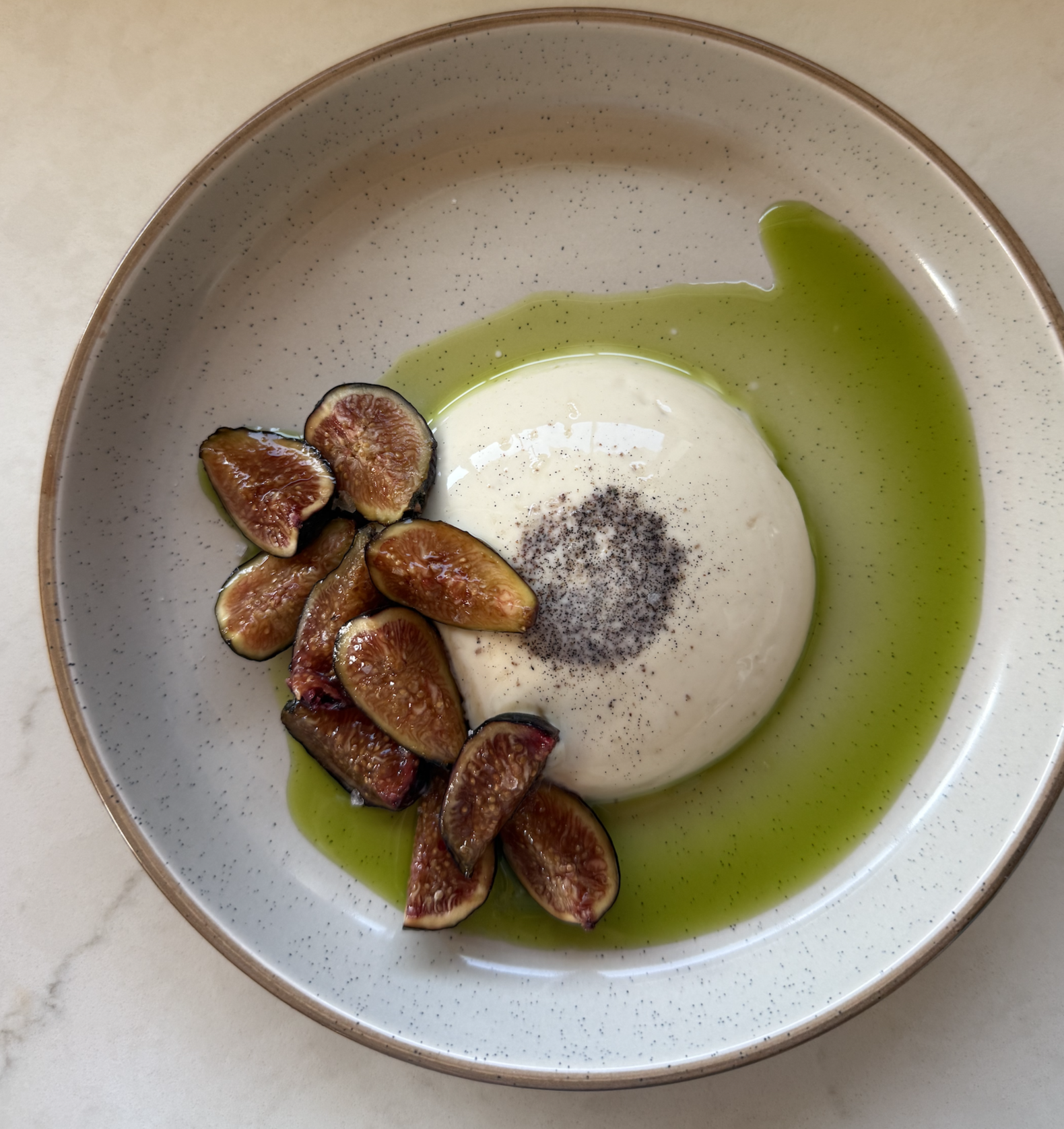
Fig leaf tastes like fig leaf.
People will tell you it's vanilla and toasted coconut with something grassy and matcha-adjacent underneath, and they're not wrong, exactly. But every one of those comparisons is reaching for a thing it already knows, and fig leaf isn't that thing. It's its own flavor. There's nothing quite like discovering one.
Panna cotta is the right vehicle because it’s literally just cream steeped with whatever you want to taste, sweeten it, strain it, set it with gelatin. That's the entire technique. Which means the flavor has nowhere to hide.
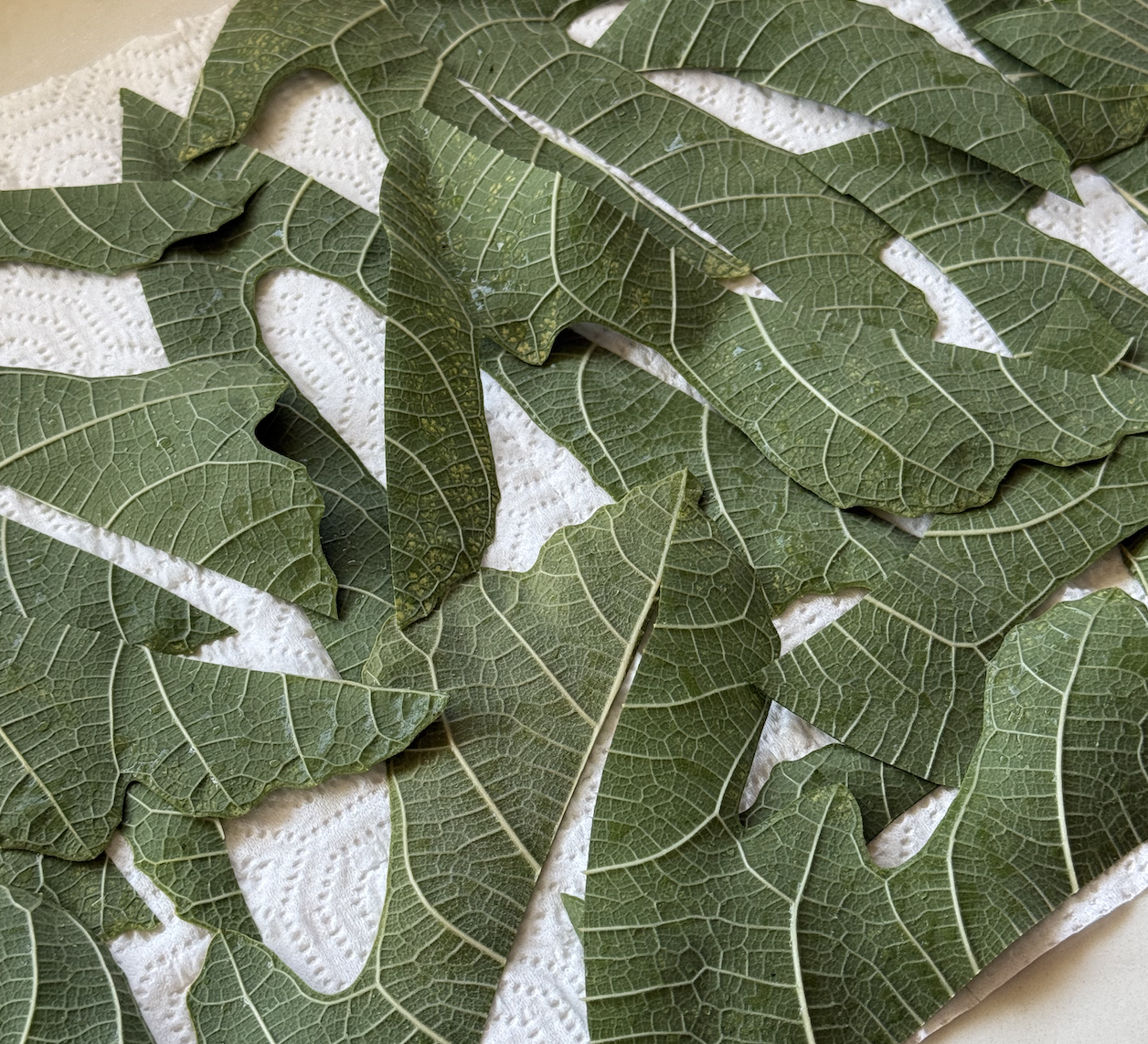
The part I'd fight for is using the leaves two ways. Toasted, they go sweet and nutty and that's what goes into the cream. Raw and blended into oil, they hold onto the green, grassy, almost herbal note that toasting burns off. One without the other is half the picture. Together you get the full fig leaf experience, and it's delicate but it still somehow wows.
The balsamic macerated figs are there for zing and for that jammy fig texture against the set cream. Don't skip them.
I am now a little obsessed and will need to control myself before I decimate my landlord's tree.
PREP TIME: 30 minutes active
COOK TIME: 15 minutes, plus overnight to set
*Make the panna cotta the day before. The fig leaf oil can be made days ahead.
Ingredients (2, 4 oz molds)
Fig Leaf Panna Cotta:
1 fig leaf, for toasting
180 g heavy cream
60 g whole milk
25 g sugar
1 sheet gelatin (2 g, 200 Bloom Gold)*
½ tsp vanilla bean powder (optional, but vanilla is a flavor enhancer and only boosts that the fig leaf profile)
pinch of kosher salt
*Can be substituted for 1 tsp of powdered gelatin.
Fig Leaf Oil:
4–5 fresh fig leaves, raw, thick stems removed (about 30 g)
1 cup (240 ml) neutral oil
Balsamic Macerated Figs:
8 ripe figs
2 tbsp aged balsamic
1 tsp honey (optional, if balsamic is very sweet, can be omitted)
pinch of flaky sea salt
Step 1: Fig Leaf Oil
Rinse and dry 4–5 fresh fig leaves to clean off any sap. Cut around the thick center stems.
Blanch the leaves in boiling water for 10 seconds, strain, and pat completely dry with paper towels.
Combine the leaves with 1 cup neutral oil in a blender and run it on high for 4–6 minutes. The friction should bring the oil to about 150°F — warm to the touch.
Strain through a fine mesh sieve lined with cheesecloth or a coffee filter. Let it drip. Do not press or squeeze — that's how you get cloudy oil instead of a clean vivid green. I like to let it sit overnight in the fridge to fully strain. This can be done days in advance.
Step 2: Toast the Fig Leaf & Infuse the Cream
Toast the fig leaf on a dry pan on medium-low heat for 30-60 seconds each side. Alternatively, you can torch it lightly. That’s the fastest option and what I did.
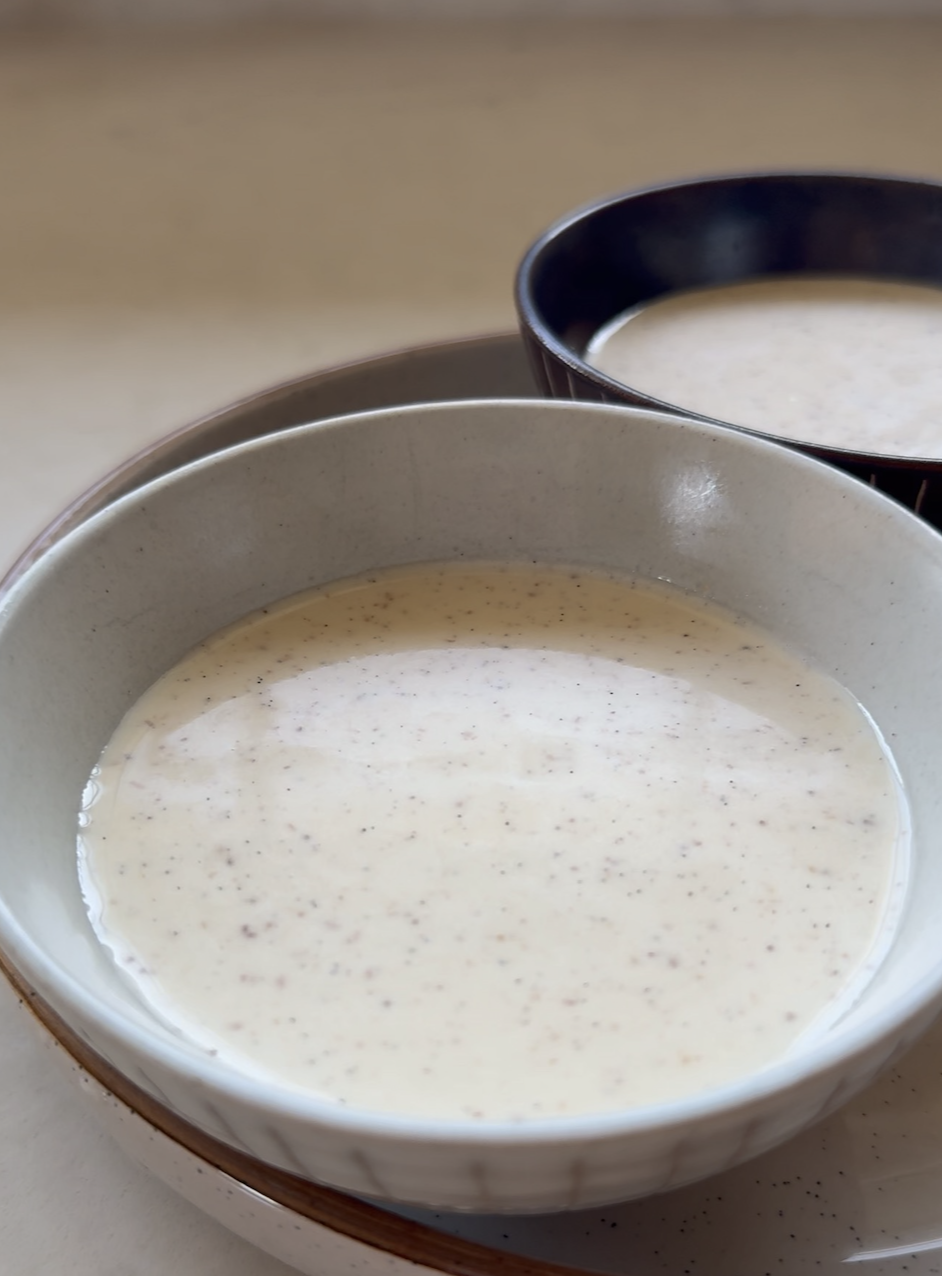
Combine heavy cream, milk, sugar, vanilla bean if using, and a pinch of salt in a small saucepan. Add the toasted leaf.
Warm over medium-low until it just steams and the sugar dissolves. Do not boil. Kill the heat, cover, and steep 30-45 minutes.
Strain out the leaf, pressing gently to get everything out of it.
Step 3: Set the Panna Cotta
If using sheets: submerge 1 gold gelatin sheet in a bowl of ice cold water and soften for 10 minutes, until floppy. Lift out and squeeze firmly to wring out the water. If using powder: sprinkle a scant 1 tsp powdered gelatin over 1 tbsp cold water in a small bowl and bloom for 5–10 minutes, until it looks like wet sand. The water is measured here because unlike sheets, there's nothing to squeeze out — it all goes in.
Off the heat, whisk the gelatin into the warm infused cream until fully dissolved. The cream should be hot enough to melt it but nowhere near boiling — boiling weakens the set. I used an immersion blender to quickly incorporate, but you can totally hand whisk it together.
Let the mixture cool for about 20 minutes then stir so the vanilla bean doesn’t settle as much at the bottom (like mine did — lesson learned).
Lightly oil two 4oz molds. Divide the cream between them and skim any foam off the surface with a spoon, which gives you a cleaner top once you invert.
Cover and refrigerate overnight.
Step 4: Balsamic Macerated Figs
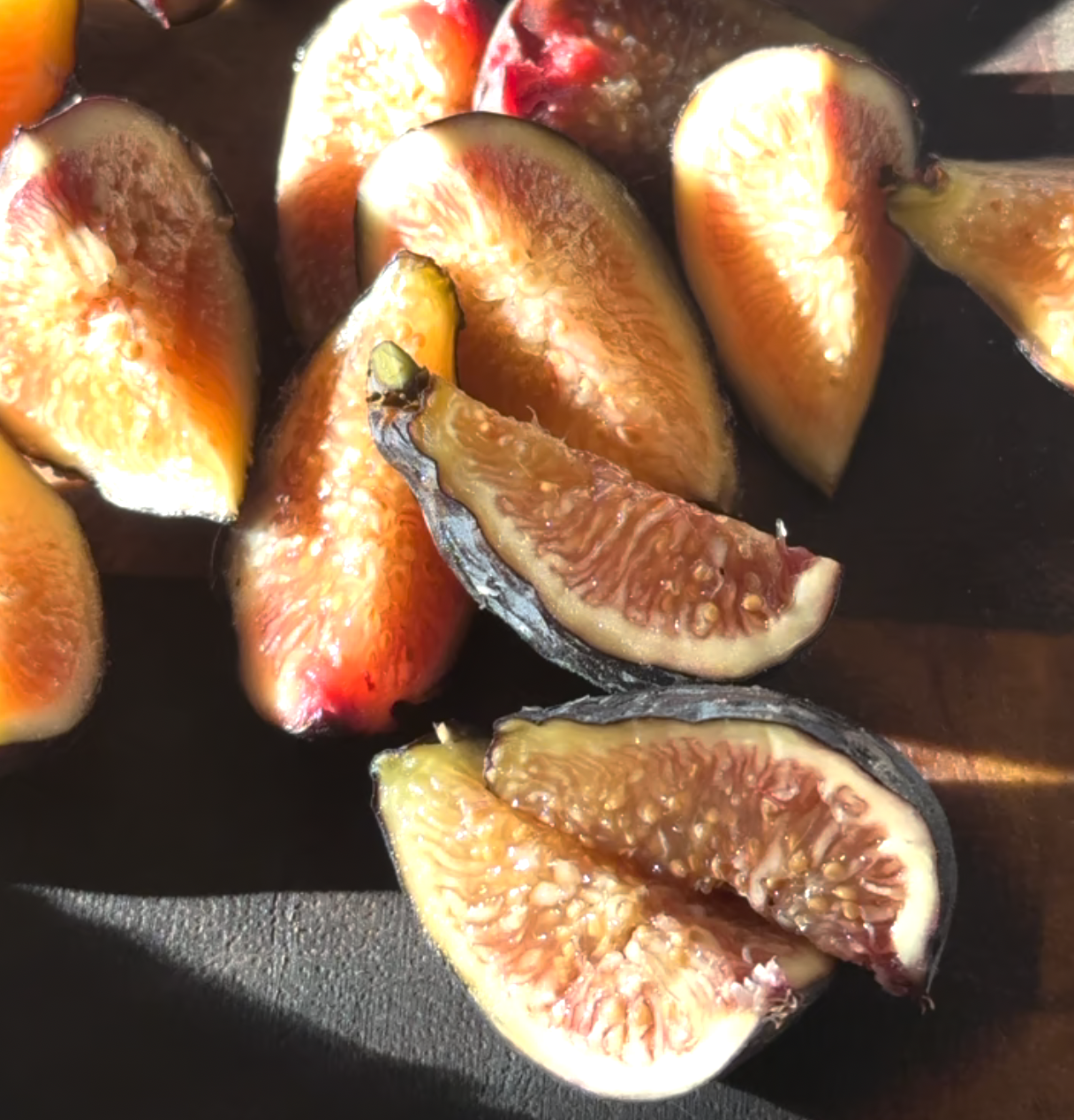
Quarter the figs and drizzle the balsamic and honey over them. Give it a gentle toss and top with flaky salt before plating.
Step 5: Plating
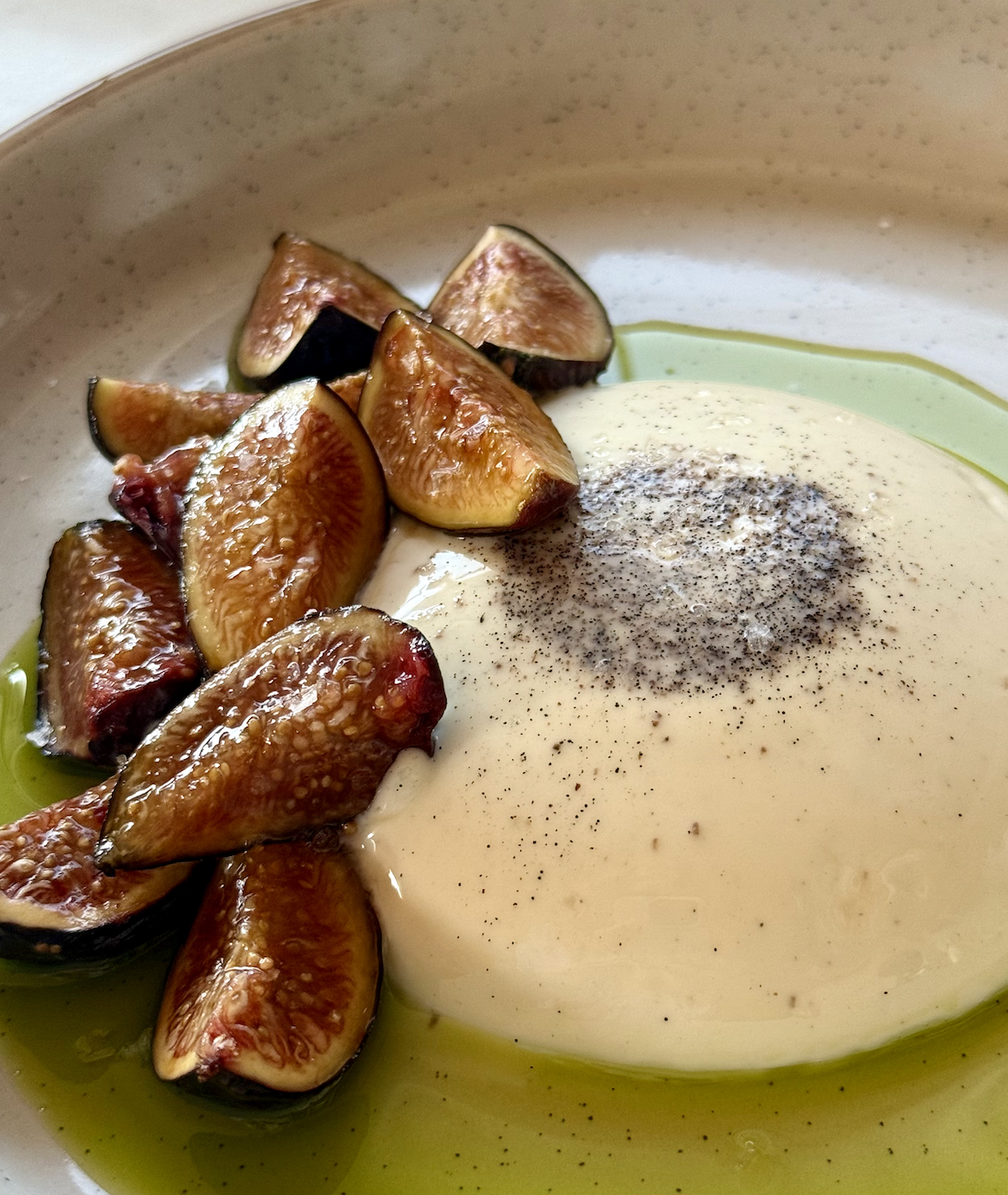
Dip each mold in hot water for 5–8 seconds and invert onto a plate. If it resists, dip again briefly.
Generously pour fig leaf oil around the panna cotta on all sides.
Spoon the macerated figs and their syrup alongside.
Enjoy! Please tag me if you try it!! Cheers