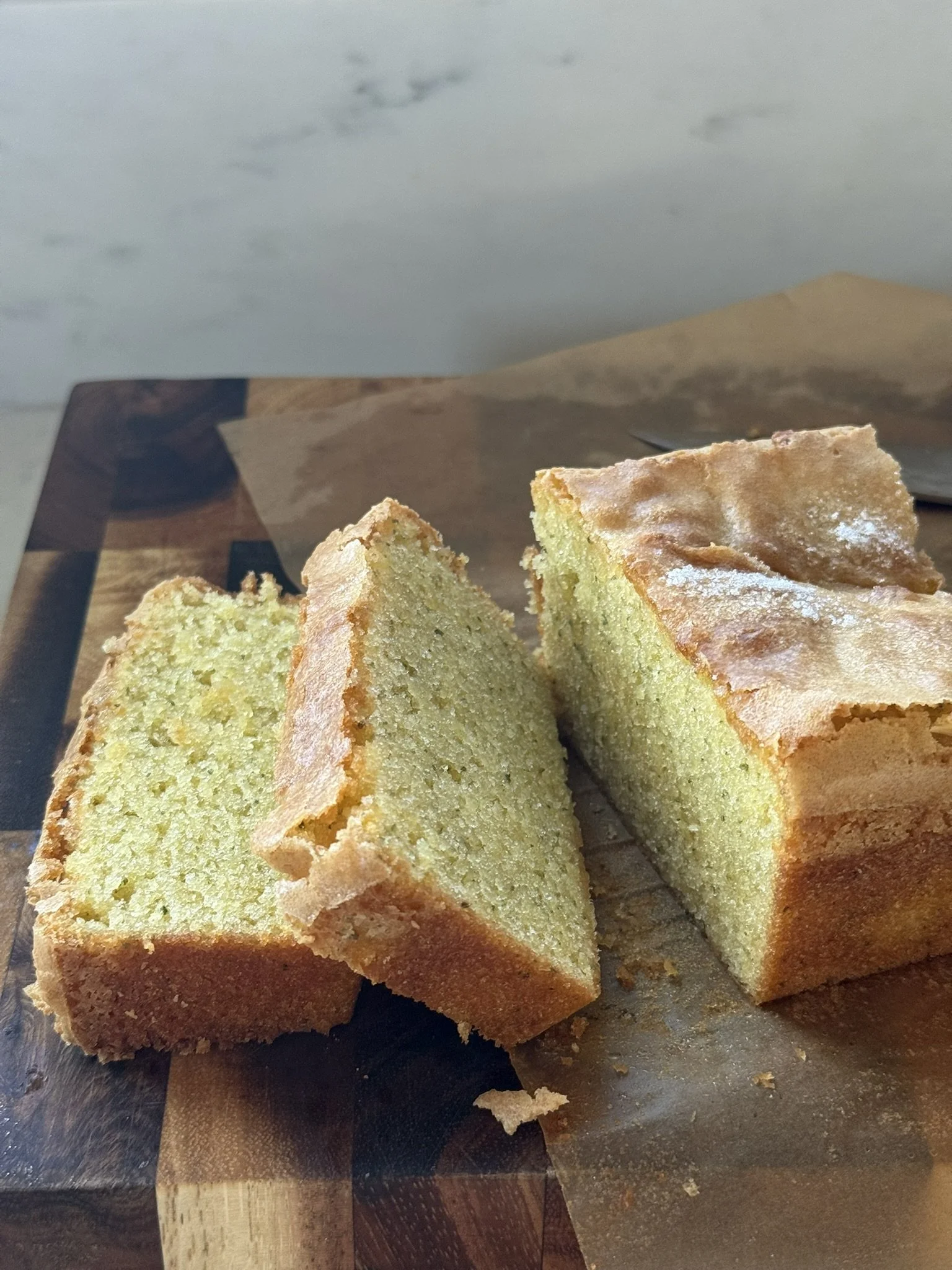
If you made my fig leaf panna cotta, you already know the secret: the leaf is where the magic is. Not the fruit. Fig leaves smell like coconut, vanilla, and green almond all at once. This loaf is my excuse to put that flavor somewhere it can really settle in.
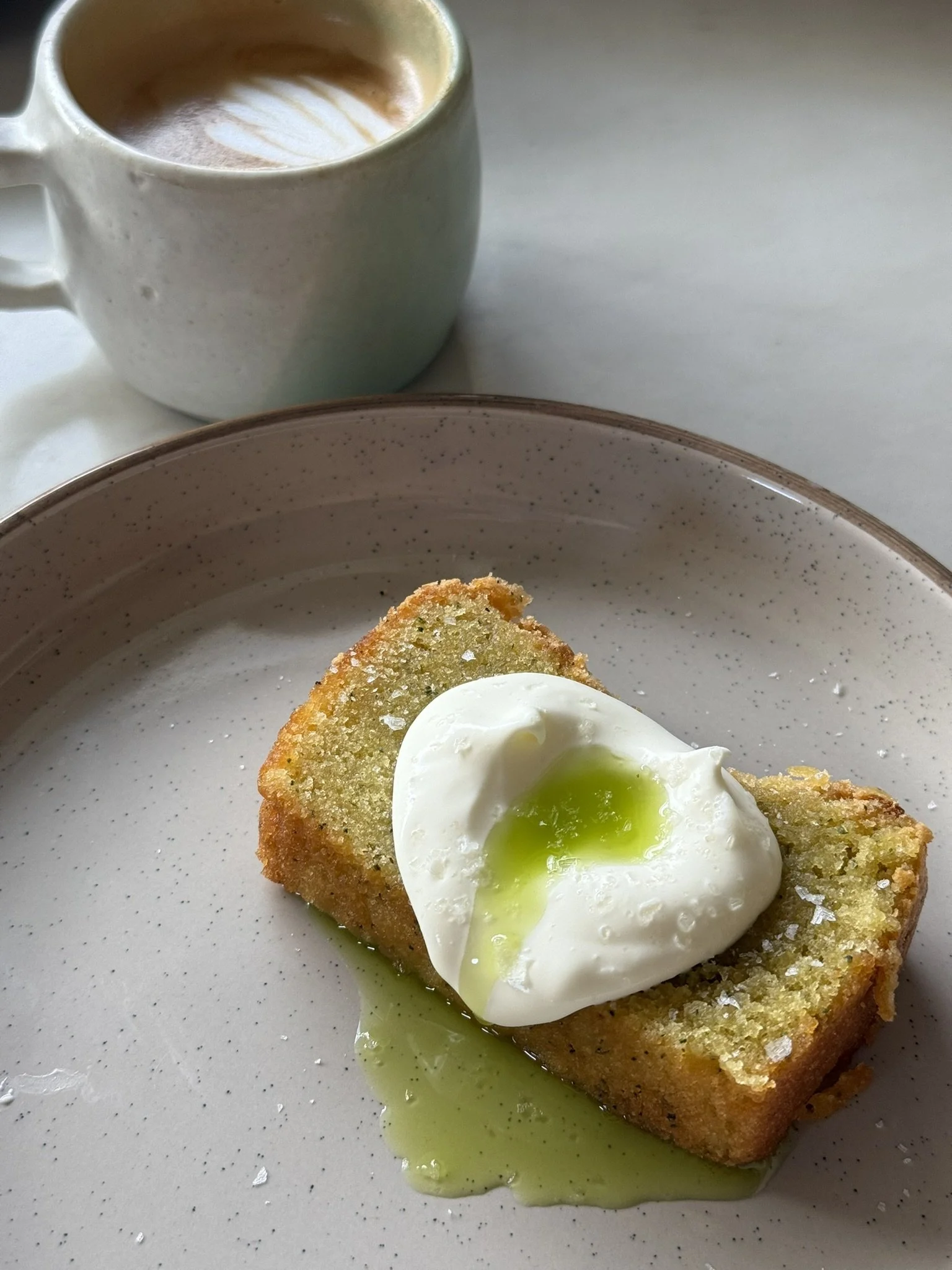
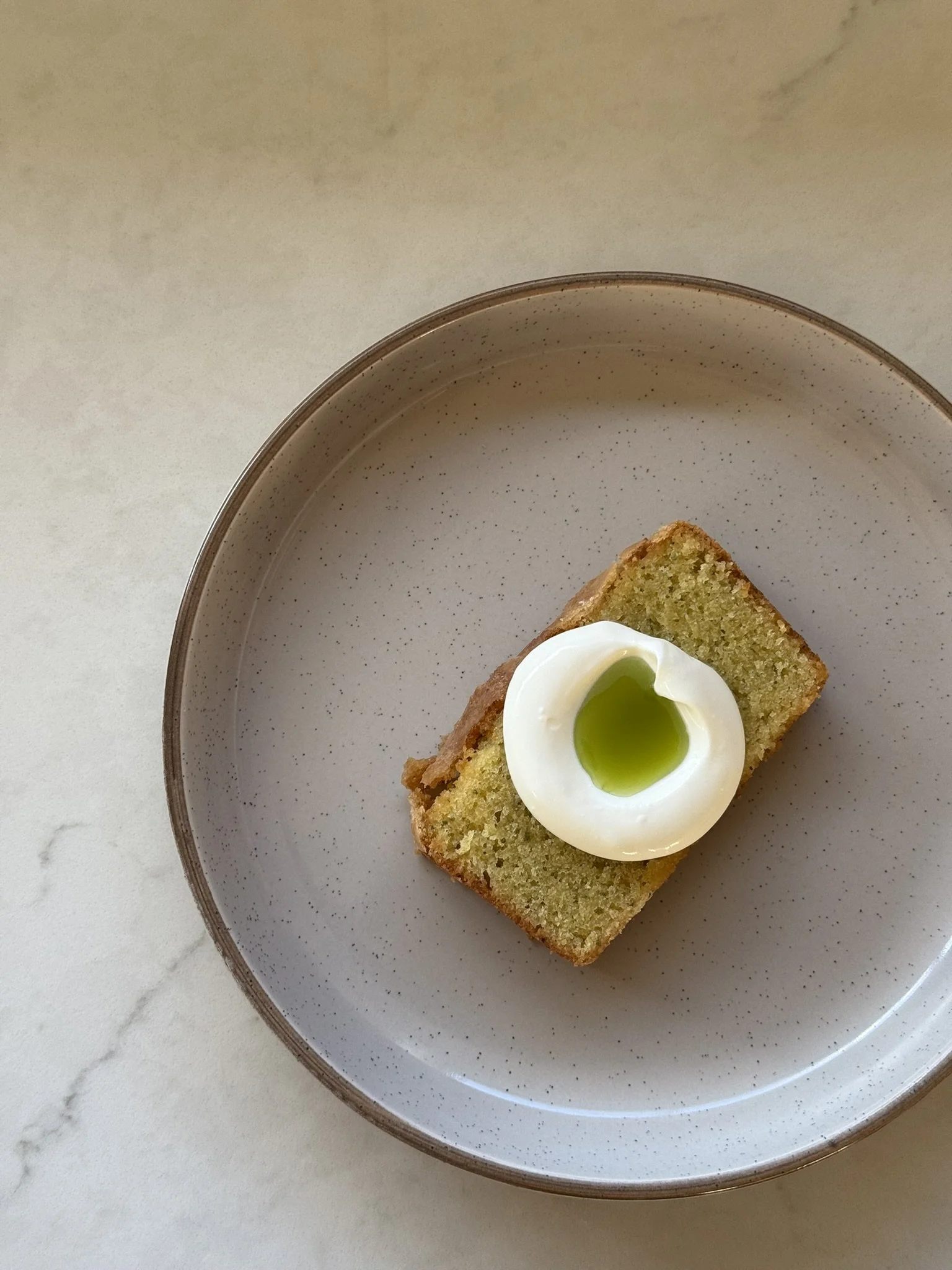
It's an olive oil cake at heart, made with almond flour for richness and a separated-egg method so it stays light instead of dense. The fig leaf gets steeped into the olive oil, which carries it into every crumb. I served it with a spoonful of crème fraîche, flaky salt, and a drizzle of more fig leaf oil — and I'd do it exactly that way again.
PREP TIME: 30 minutes active
COOK TIME: 15 minutes, plus overnight to set
*Make the panna cotta the day before. The fig leaf oil can be made days ahead.
Ingredients (makes one 9x5 loaf, about 10 slices)
Fig Leaf Finishing Oil (for the drizzle):
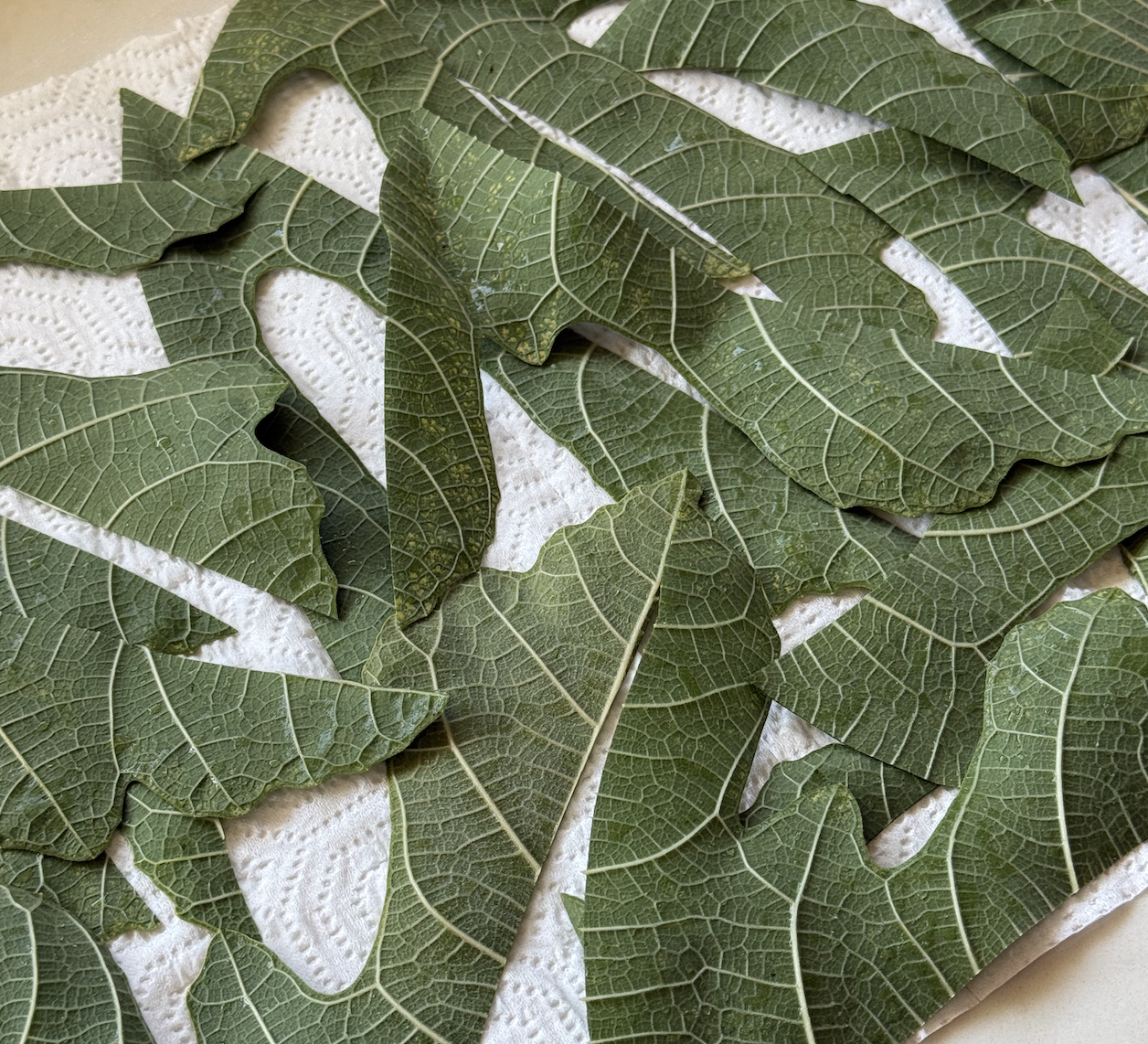
4–5 fresh fig leaves, blanched and dried, stems removed
1 cup (240 ml) neutral oil
Fig Leaf Infused EVOO (for the cake):
4 fresh fig leaves, stems removed (Careful with the sap! It’s phototoxic)
160 g mild extra virgin olive oil
Cake:
150 g (⅔ cup) fig leaf oil, cooled
200 g (1 cup) granulated sugar
1 toasted fig leaf (optional for blending with sugar)
3 large eggs, separated
145 g (1½ cups) fine blanched almond flour
65 g (½ cup) all-purpose flour
1½ tsp baking powder
½ tsp fine sea salt
80 ml (⅓ cup) whole milk, room temperature
¼ tsp cream of tartar
1 tbsp turbinado sugar, for the top
To Serve
Crème fraîche, loosened with a splash of cream if necessary
Flaky salt
Fig leaf oil
Step 1: Fig Leaf Finishing Oil (for the drizzle)
Wipe the fig leaves clean and blanch in boiling water for 10-15 seconds.
Strain and dry completely
Blend with 1 cup of neutral oil on high speed for 4-5 minutes.
Strain over cheesecloth or coffee filter. Don’t press it or it will become cloudy. Let gravity do its thing. Overnight in the fridge is ideal.
Step 2: Fig Leaf Infused EVOO (for inside the cake)
Wipe the fig leaves clean and dry them completely, then tear them into a small glass or ceramic bowl.
Warm the olive oil to about 150–160°F. It should feel warm, not hot, with no shimmer.
Pour the oil over the leaves and steep for 30 minutes to 1 hour. Strain through a fine mesh sieve, pressing on the leaves, and let the oil cool completely.
Step 3: The Cake
Heat the oven to 350°F (175°C). Grease a 9x5 loaf pan and line it with a parchment sling.
Whip the egg whites with the cream of tartar to soft, glossy peaks. The tips should curl over, not stand straight. Set aside.
(optional step but recommended) Blend 1 toasted fig leaf with all the sugar until fine. You can toast the leaf on a hot pan for just a couple minutes until fragrant and crumbly.
In a large bowl, whisk the yolks and sugar for about 2 minutes, until pale and thick. Slowly stream in the cooled fig leaf infused olive oil (from step 2) while whisking, then whisk in the milk.
In another bowl, whisk together the almond flour, all-purpose flour, baking powder, and salt. Fold into the yolk mixture just until no dry pockets remain. It'll be thick.
Fold in the egg whites in three additions. Stir the first third in fairly freely to loosen the batter, then fold the rest in gently, stopping as soon as the streaks disappear.
Scrape into the pan, smooth the top, and sprinkle with turbinado sugar.
Bake for 50–60 minutes, until deep golden and a skewer comes out with a few moist crumbs.
Cool in the pan for at least 30 minutes before removing and slicing.
Step 4: Plating
Top with a spoonful of loosened crème fraîche, a pinch of flaky salt, and a drizzle of fig leaf oil right before serving.
Enjoy!
Full disclosure: It's better tomorrow. This cake genuinely improves overnight, and not just because it's had time to cool. A few things are happening as it rests.
First, the flavor spreads out. The fig leaf aroma lives in the oil, and right out of the oven, that oil is still unevenly distributed through the crumb. As the cake sits, the oil settles evenly throughout, so every bite carries the same amount of flavor.
Second, the moisture evens out. A freshly baked cake is wetter in the center and drier at the edges, and it keeps releasing steam for hours. That steam takes some of the aroma with it. Once the loaf is wrapped and the moisture balances out, the aroma stays in the cake instead of escaping into your kitchen.
And third, the competition fades. Fresh from the oven, a cake smells mostly like baking: toasted edges, warm egg, hot oil. Those aromas are loud but short-lived. The fig leaf is quieter and much more stable, so once the baking smells fade overnight, it finally gets the spotlight.
By day two, the cake is more fragrant, more evenly moist, and tastes more like fig leaf. After day three, it starts to dry out, so day two is the sweet spot.